
Structural integrity reserve studies (SIRS) in Miami-Dade County
Get your SIRS scheduled before the 31 December 2026 outside date.
Get Your Free Proposal
Tell us about your building and any notice or deadline you have. We will respond right away with next steps and a proposal.
We arrange and coordinate structural integrity reserve studies for condo and co-op associations in Miami-Dade County, working to the rules of the Miami-Dade County Building Department from the first notice to the final report.
- Free, no-obligation proposal
- Inspections by Florida-licensed engineers and architects
- Milestone, SIRS and recertification deadlines
The short answer
Condo associations in Miami-Dade County need a structural integrity reserve study at least every 10 years for buildings three habitable stories or higher, and no SIRS may be completed after 31 December 2026. County Code s. 8-11(f) has required recertification since 1975 and covers nearly every building type, not only condos. Coastal condo and co-op buildings built in 1998 or later recertify at 25 years, other buildings built from 1993 at 30, then every 10 years.
Last updated
The numbers that drive a SIRS
Eight required items, plus any other item whose deferred maintenance or replacement cost is above $25,000, or the Division's inflation-adjusted figure of $25,675 for 2026.
Items with a remaining useful life over 25 years do not need replacement reserves, though the study may still set a deferred maintenance amount.
Local rules that shape a SIRS in Miami-Dade County
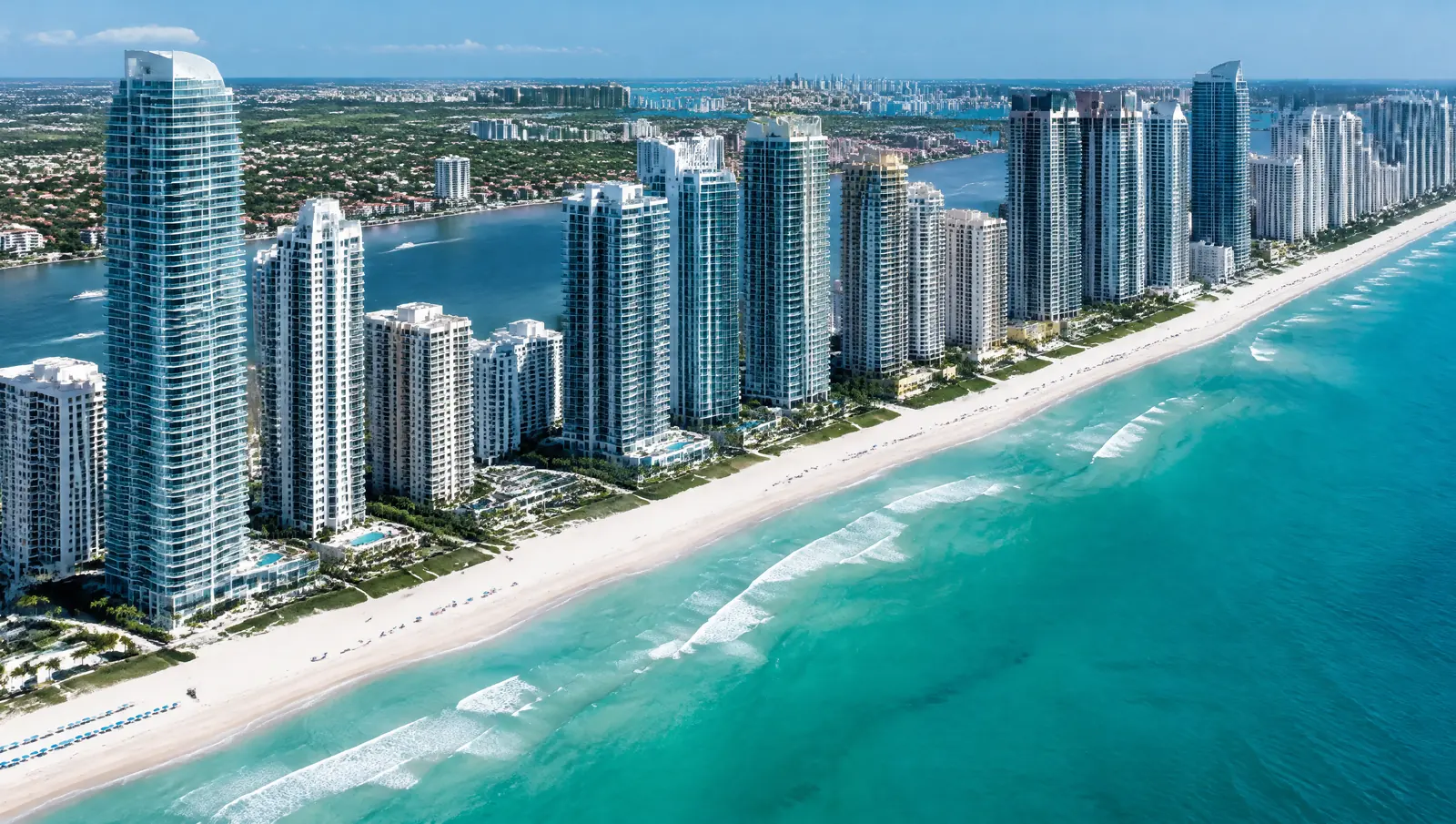
- The county schedule turns on the year built. Coastal condo and co-op buildings three stories or more within three miles of the coastline and built in 1998 or later recertify at 25 years; other buildings built in 1993 or later at 30 years; every building then recertifies every 10 years.
- In the state's 2025 milestone data, Miami-Dade building officials reported 308 required Phase 2 inspections, the highest count among the counties that reported that year.
- Of the 24 buildings found unsafe or uninhabitable statewide in 2025, 23 were in Miami-Dade, and Aventura alone reported 19.
- The county identifies the coastal condo and co-op buildings that fall under the three-mile rule through a GIS mapping project, so the county's notice, not a tape measure, settles which schedule applies.
- The county has run a Condominium Special Assessment Loan Program with loans up to $50,000, at zero percent for 40 years for eligible households earning up to 140 percent of area median income, with priority for owners 62 or older. Its page gives a June application window without a year, so ask the county whether a round is open.
- Courtesy notices go out two years and one year before the due year, and the recertification reports are due within 90 days of the Notice of Building Recertification.
- Threshold buildings with structural glazing also need a facade inspection of the glazing adhesive every five years, filed within 90 days of notice with every page signed and sealed. The processing fee is $380.90.
- OPPAGA found that some building departments in Miami-Dade accept one combined Phase 1 and Phase 2 milestone inspection instead of two separate visits.
How we handle structural integrity reserve studies in Miami-Dade County
The county recertification packet already documents the structure, the electrical system, parking lot lighting and, on glazed towers, the facade adhesive. We hand the latest recertification and milestone reports to the reserve professional so the SIRS starts from what the engineers found, which matters in a county that reported 308 required Phase 2 inspections in 2025.[1][2]
Permits for structural integrity reserve studies (sirs) in Miami-Dade County
- Miami-Dade County Building, Recertification: Recertification notices, filings and fees for unincorporated Miami-Dade, and the county code every city follows
- City building departments (for example City of Miami, Miami Beach): Run recertification and milestone filings inside their own city limits
What does a SIRS cover?
At a minimum the roof; the structure, including load-bearing walls and primary structural members and systems; fireproofing and fire protection systems; plumbing; electrical systems; waterproofing and exterior painting; windows and exterior doors; and any other item above the reserve threshold whose failure would harm those items. For each item the study gives the estimated remaining useful life and the replacement cost or deferred maintenance expense, and it includes at least a baseline funding plan that keeps the reserve cash balance above zero in every budget year.[6]
Who may perform or verify the study?
An engineer licensed under chapter 471, an architect licensed under chapter 481, or a person certified as a reserve specialist or professional reserve analyst by the Community Associations Institute or the Association of Professional Reserve Analysts. The rule covers the visual inspection portion too. We arrange the study with one of these professionals and coordinate the schedule; the professional signs the study.[6][7]
What are the deadlines?
- Owner-controlled associations existing on or before 1 July 2022 had to complete a SIRS by 31 December 2025.
- With a milestone inspection due on or before 31 December 2026, the SIRS may be done at the same time, but no SIRS may be completed after 31 December 2026.
- After that, at least every 10 years.
- Within 45 days of receiving the study, owners get a copy or notice and the association files a statement with the Division.
How does the SIRS change the budget?
Reserves for the SIRS items must be based on the most recent study, and for budgets adopted on or after 31 December 2024 an owner-controlled association that must have a SIRS cannot vote to waive or reduce those reserves, except a multicondominium with a Division-approved alternative funding method. SIRS items may be funded by regular assessments, special assessments, lines of credit or loans; the last three need a majority of the total voting interests.[6]

| Topic | Rule in Miami-Dade County | Source |
|---|---|---|
| First inspection | County Code s. 8-11(f) has required recertification since 1975 and covers nearly every building type, not only condos. | Miami-Dade County |
| Buildings covered | The county files for unincorporated areas, while cities such as Miami and Miami Beach run their own desks under the same code. | Miami-Dade County |
| Electrical | Electrical systems of 400 amperes or more need infrared thermography as part of county recertification. | Miami-Dade County |
| Structures covered | Parking lot lighting is checked against Code s. 8C-3 and guardrails beside canals or lakes against s. 8C-6. | Miami-Dade County |
| Repairs | Repairs must be permitted before the county recertifies the building. | Miami-Dade County |
| Fees | The county's initial recertification review fee is $403.13, and a late submission costs $453.52. | Miami-Dade County |
Structural integrity reserve studies (SIRS) services in Miami-Dade County
SIRS study in Miami-Dade County
The full study for a building that has never had one, or whose last one is 10 years old.
SIRS update in Miami-Dade County
The update the law requires when your funding changes, or before a budget that departs from the last study.
Reserve funding plan in Miami-Dade County
Turning the SIRS into a budget, with the baseline plan, loans, lines of credit, pooling and the post-milestone pause.
SIRS with a milestone inspection in Miami-Dade County
Doing both together, reusing a recent milestone inspection and the combined 31 Dec 2026 outside date.
Frequently asked questions
How does the Miami-Dade County inspection schedule affect our SIRS?
Unincorporated Miami-Dade follows County Code s. 8-11(f), a building recertification program in place since 1975 and amended on 1 June 2022. It reaches almost every building type; only single-family homes, duplexes and minor buildings of 2,000 square feet or less with an occupant load of 10 or less are exempt. A milestone inspection completed within the previous five years may replace the visual inspection portion of the SIRS.
Which Miami-Dade buildings were due by 31 December 2024?
Coastal condo and co-op buildings three stories or more within three miles of the coast built from 1983 to 1997, and other buildings built from 1983 to 1992. Buildings built before 1983 keep their established schedule.
How often do Miami-Dade milestone inspections lead to Phase 2?
Miami-Dade building officials reported 308 required Phase 2 inspections in 2025, the highest count among the counties that reported that year.
Is there county help with special assessments in Miami-Dade?
The county has run a Condominium Special Assessment Loan Program with loans up to $50,000 for eligible owners. Its page does not say whether a round is open now, so check with the county before counting on it.
Sources
- Recertification (Miami-Dade County Building), Miami-Dade County. Accessed October 28, 2026.
- Milestone Inspection Reporting Data 2024 and 2025, Report 26-04, July 2026, Florida Legislature, OPPAGA. Accessed October 27, 2026.
- Condominium Special Assessment Program Relaunched, Miami-Dade County Housing and Community Development. Accessed October 28, 2026.
- Get a Building Recertification (City of Miami), City of Miami. Accessed October 27, 2026.
- Building Recertification, City of Miami Beach, City of Miami Beach. Accessed October 28, 2026.
- s. 718.112, Florida Statutes (2026): Bylaws, including (2)(f) budget and reserves, (2)(g) SIRS, (2)(h) milestone inspections, The Florida Senate. Accessed October 28, 2026.
- Inspections: DBPR Condominium Information and Resources, Florida DBPR, Division of Florida Condominiums, Timeshares, and Mobile Homes. Accessed October 28, 2026.
- Reserve threshold, Florida DBPR. Accessed October 28, 2026.
Get a free quote
Tell us about your project and we will get back to you fast.